
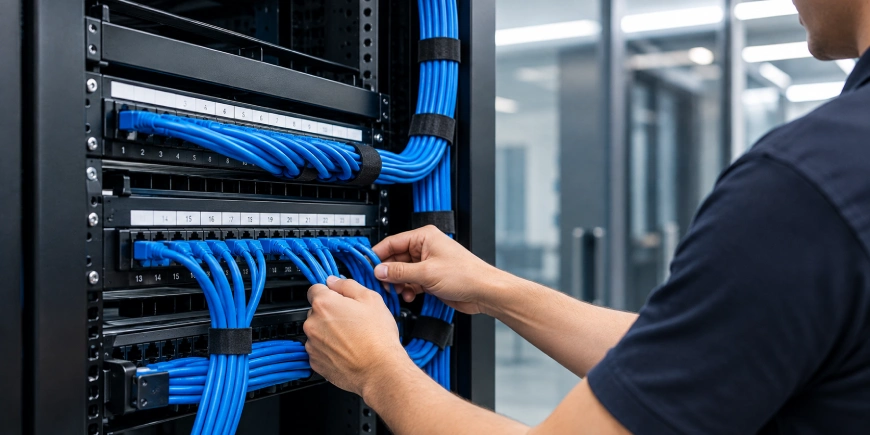
A reliable network is now essential for almost every business. Computers, phones, Wi-Fi access points, security cameras, access control systems, cloud applications and other connected devices all depend on a stable communications infrastructure.
If your business is dealing with slow connections, frequent network problems, or a growing pile of unorganised cables, the underlying cabling may be part of the problem. A professional security camera installation company in Canada can also help businesses understand how structured cabling supports security and other connected systems.
Here are seven signs that it may be time to upgrade your cabling infrastructure.
1. Your Network Is Frequently Slow or Unreliable
One of the clearest warning signs is a network that regularly becomes slow or unstable.
Employees may experience:
- Slow file transfers
- Dropped VoIP calls
- Video conferencing problems
- Unreliable internet connections
- Delays when accessing cloud applications
- Devices disconnecting from the network
Not every network problem is caused by cabling. Switches, routers, internet service, software and configuration can also be responsible. However, old, damaged, poorly terminated, or incorrectly installed cables can limit network performance.
A professional assessment can help determine whether the problem is the cabling or another part of the network.
2. Your Network Cables Are Messy and Difficult to Trace
Look inside your telecommunications room or network rack.
If cables are tangled together, unlabeled, loosely routed, or difficult to trace, maintenance can become unnecessarily difficult.
Poor cable management can lead to:
- Longer troubleshooting times
- Accidental disconnections
- Difficulty identifying faulty connections
- Limited rack space
- Greater risk of installation mistakes
Structured cabling uses organized pathways, patch panels, labeling and consistent termination practices. The goal is to make the infrastructure easier to understand and maintain.
A clean installation is not just about appearance. It gives technicians a much clearer picture of how the network is connected.
3. Your Business Is Adding More Devices
Businesses rarely use the same number of connected devices for long.
A growing company may add:
- Employees and workstations
- Wireless access points
- IP phones
- Security cameras
- Access control devices
- Printers
- Servers
- IoT equipment
- Meeting-room technology
If additional devices are constantly being connected through temporary cables or improvised network extensions, your infrastructure may not have been designed for growth.
A structured approach gives new devices dedicated connections and provides a clearer way to expand the network.
Plan for Growth Before You Need It
Good structured cabling installation services should consider both current requirements and expected future demand.
Leaving spare ports, pathway capacity, rack space and suitable cable infrastructure can make future expansion much easier.
4. Your Business Still Relies on Old or Mixed Cabling
Older buildings often contain several generations of network cabling installed at different times.
You may find a mixture of older Ethernet standards, newer cables, abandoned connections and temporary runs.
This can make troubleshooting difficult and create uncertainty about what the infrastructure can actually support.
A professional cabling assessment can identify:
- Cable types
- Cable condition
- Termination quality
- Available connections
- Unused or abandoned runs
- Potential performance limitations
The Telecommunications Industry Association (TIA) maintains TIA-568, the commercial building telecommunications cabling standard, covering structured cabling requirements for commercial environments.
The exact cable category and design should be selected according to the application’s requirements rather than simply choosing the newest cable available.
5. You Are Installing or Expanding Security Systems
Modern security systems increasingly rely on network infrastructure.
IP security cameras, video recorders, access control systems, intercoms and other devices may need reliable Ethernet connections and, in many cases, Power over Ethernet (PoE).
If your business is adding several cameras or access-controlled doors, it is worth reviewing the network infrastructure at the same time.
The cabling plan should account for:
- Camera locations
- Access control points
- PoE requirements
- Network switch capacity
- Cable distances
- Telecommunications rooms
- Future security devices
This is especially important for commercial buildings where security equipment may be distributed across multiple floors or large outdoor areas.
6. Troubleshooting Takes Too Long
Ask your IT team or service provider how long it takes to identify a failed network connection.
If technicians regularly have to guess which cable connects to which device, the infrastructure needs better organization.
A structured cabling system can simplify troubleshooting through:
- Consistent labeling
- Patch panels
- Organized racks
- Documented connections
- Clearly defined cable pathways
- Tested network links
This can reduce unnecessary downtime and make maintenance more predictable.
A well-documented installation also helps when a new IT technician or contractor takes responsibility for the building.
7. Your Business Is Moving, Renovating, or Expanding
A renovation or office move is often the best time to rethink cabling.
Installing cables after walls, ceilings and work areas have already been completed can be more disruptive and expensive.
If you are:
- Moving to a larger office
- Adding new departments
- Renovating a commercial space
- Opening another location
- Expanding warehouse operations
- Building a new facility
Include network infrastructure in the early planning stage.
This allows pathways, telecommunications rooms, outlets, security devices and network equipment to be coordinated before construction is complete.
What Does a Structured Cabling Upgrade Include?
A professional structured cabling installation project may include much more than pulling Ethernet cables.
Depending on the building, the scope can include:
Cabling Design
The installer reviews the floor plan, equipment locations, network requirements and future expansion needs.
Cable Installation
Cables are routed through appropriate pathways and terminated at outlets, patch panels, racks, or equipment.
Cable Management
Proper routing, separation, labeling and organization make the system easier to maintain.
Testing
Installed connections should be tested to verify that they meet the required performance criteria. TIA’s cabling standards address installation and field-testing requirements as part of the broader telecommunications infrastructure framework.
Documentation
A quality project should provide useful information about cable identification, connections, equipment locations and test results.
Structured Cabling Installation in Halifax, Ottawa and Calgary
Businesses have different infrastructure challenges depending on their building and operations.
For structured cabling installation in Halifax, an older commercial building may require careful assessment of existing pathways and cabling.
For structured cabling installation in Ottawa, offices and institutional properties may need infrastructure that supports large numbers of workstations, wireless devices, phones and security systems.
For structured cabling installation in Calgary, warehouses, industrial facilities and growing commercial properties may require longer cable runs, fiber backbones and infrastructure designed for future expansion.
The location matters, but the building’s actual requirements should always drive the design.
How to Know If You Need a Structured Cabling Company
You do not necessarily need to replace every cable because your network has a problem.
Start with an assessment.
A qualified structured cabling installation company should be able to inspect the existing infrastructure, identify weaknesses, explain what needs to be replaced and distinguish necessary upgrades from optional improvements.
Ask for:
- A clear scope of work
- Recommended cable types
- Cable and equipment locations
- Testing procedures
- Labelling and documentation
- Future expansion considerations
- A transparent explanation of costs
This approach helps prevent unnecessary upgrades while giving your business a clearer path toward a dependable network.
Conclusion
Structured cabling is easy to overlook because most of it sits behind walls, above ceilings, or inside network rooms. But when the infrastructure is poorly planned, employees and IT teams often feel the effects every day.
Slow connections, messy wiring, frequent troubleshooting, new security devices, outdated cabling and business expansion are all good reasons to review your network infrastructure.
AlfaDefence.io helps businesses plan and install low voltage and structured cabling infrastructure with attention to reliability, organisation, testing and future growth.
A good cabling system should not simply work today. It should give your business a practical foundation for the technology it will need tomorrow.
FAQs
- What are the signs that my business needs structured cabling installation?
Common signs include slow or unreliable network connections, tangled cables, frequent troubleshooting, outdated cabling, increasing numbers of connected devices and plans to renovate or expand. Businesses adding security cameras, access control, wireless access points, or VoIP systems should also review whether the existing infrastructure can support them.
- How does structured cabling installation improve business networks?
A properly designed system organizes network connections using suitable cabling, pathways, patch panels, labeling and testing. This can make the network easier to maintain and expand while reducing confusion during troubleshooting. It also provides a consistent infrastructure for computers, phones, wireless devices, cameras and other network-connected equipment.
- How much does structured cabling installation cost for a business?
The cost depends on the building size, number of network drops, cable type, installation difficulty, pathway requirements, telecommunications rooms, testing and existing infrastructure. A site assessment is normally needed before providing an accurate estimate because two buildings with the same number of devices can have very different installation requirements.
- Should I replace old Ethernet cables in my commercial building?
Not necessarily. First, inspect and test existing cabling to determine its condition and performance. Some older installations may continue to meet current requirements, while damaged, poorly terminated, or inadequate cabling may need replacement. A professional assessment can help identify which connections actually require an upgrade.
- What does a structured cabling installation company actually do?
A structured cabling company can design cable routes, install copper or fiber cabling, terminate connections, organize racks and patch panels, label cables, test links and provide documentation. Depending on the project, the infrastructure may also support wireless access points, security cameras, access control, phones and other connected systems.
- Is structured cabling useful for security camera systems?
Yes. Many modern IP camera systems depend on reliable network cabling and PoE can allow compatible cameras to receive power and data through the same cable. Proper cabling helps provide dependable connectivity and makes it easier to expand the surveillance system as the business grows.
- Can structured cabling installation be done during a commercial renovation?
Yes, and renovation is often a practical time to address cabling because walls, ceilings and work areas may already be accessible. Planning the network before construction is finished can reduce disruption and help coordinate outlets, pathways, telecommunications rooms, security equipment and other low voltage systems.