
Choosing the right surveillance system is one of the most important security decisions for any business or property owner. With advancements in technology, organizations can now choose between traditional wired CCTV systems and modern wireless surveillance solutions.
As a trusted security camera installation company in Canada, we frequently help clients evaluate which option best fits their facility, budget and long-term security goals.
The debate around wired CCTV vs. Wireless CCTV is not about which technology is universally better. Instead, it is about identifying the solution that delivers the best performance for a specific environment.
This guide explains the strengths, limitations and ideal applications of both systems to help you make an informed decision.
Understanding Video Surveillance Security Cameras
Modern video surveillance security cameras do much more than record footage.
Today’s systems can provide the following:
- Real-time monitoring
- Motion detection alerts
- Remote viewing
- AI-powered analytics
- License plate recognition
- Cloud storage integration
- Incident investigation support
The effectiveness of these features often depends on how cameras connect to the network and recording infrastructure.
What Is a Wired CCTV System?
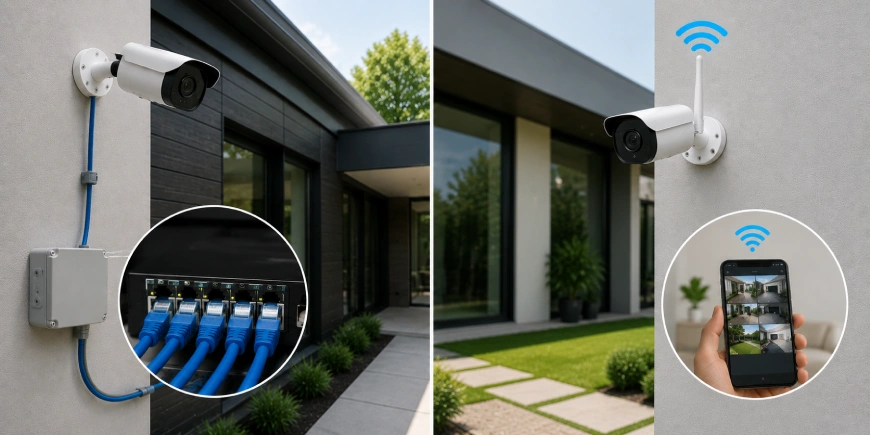
A Wired CCTV system uses physical cabling to connect cameras to network video recorders (NVRs), digital video recorders (DVRs), or monitoring platforms.
Most commercial installations use the following:
- Ethernet cables (PoE)
- Coaxial cables
- Structured cabling infrastructure
Power and data transmission are delivered through dedicated wired connections.
Advantages of Wired CCTV
Superior Reliability
Physical cable connections are generally more stable than wireless signals.
This minimizes video interruptions and connection issues.
Consistent Video Quality
Wired systems provide steady bandwidth for high-definition and 4K video streams.
Better for Large Facilities
Industrial facilities, warehouses, campuses and large commercial buildings often benefit from wired infrastructure.
Enhanced Security
Because data travels through physical cables, wired systems are generally less vulnerable to wireless interference.
Limitations of Wired CCTV
- More complex installation
- Higher cabling costs
- Longer deployment times
- Additional infrastructure requirements
What Is a Wireless CCTV System?
A Wireless CCTV system transmits video data using Wi-Fi or other wireless communication technologies.
Many cameras still require power connections, but network communication occurs wirelessly.
Advantages of Wireless CCTV
Faster Installation
Wireless systems often require less cabling and can be deployed more quickly.
Flexible Camera Placement
Cameras can be installed in locations where running cables may be difficult.
Easier Expansion
Additional cameras can often be added without extensive wiring modifications.
Lower Initial Infrastructure Costs
Smaller installations may require less upfront cabling investment.
Limitations of Wireless CCTV
- Signal interference risks
- Dependence on network performance
- Potential coverage limitations
- Bandwidth sharing with other wireless devices
Wired CCTV vs. Wireless CCTV: Key Comparisons
Reliability
Wired systems typically provide the highest reliability because they are not affected by wireless interference, signal congestion, or network fluctuations.
Wireless systems can perform very well but depend heavily on network quality.
Installation Complexity
Wireless systems are generally easier and faster to install.
Wired systems require careful infrastructure planning and cable routing.
Scalability
Both solutions can scale effectively.
Wireless systems offer easier short-term expansion, while wired systems often provide better long-term performance for large deployments.
Video Quality
Both technologies can support HD and 4K surveillance.
However, wired systems typically deliver more consistent performance under heavy network loads.
Maintenance
Wireless systems require ongoing network monitoring and optimization.
Wired systems may require less network troubleshooting but involve physical cable infrastructure.
Best Applications for Wired CCTV
Commercial Buildings
Large office environments benefit from stable network connectivity.
Industrial Facilities
Manufacturing plants and warehouses often require reliable continuous recording.
Educational Institutions
Schools and universities typically deploy extensive surveillance networks.
Financial Institutions
Banks often prefer highly reliable surveillance infrastructure.
Best Applications for Wireless CCTV
Small Businesses
Retail stores and smaller offices can often benefit from easier installation.
Temporary Sites
Construction projects and temporary facilities may require flexible deployments.
Residential Properties
Homeowners often prefer wireless solutions for convenience and scalability.
Remote Monitoring Locations
Areas where cable installation is challenging may benefit from wireless cameras.
Network Infrastructure Matters
Whether choosing wired or wireless surveillance, network design plays a critical role in system performance.
Important factors include:
Bandwidth Planning
Higher-resolution cameras require more network capacity.
Storage Requirements
Video retention policies affect storage infrastructure needs.
Cybersecurity
Proper network security helps protect surveillance data.
Future Expansion
Scalable infrastructure supports additional cameras and technologies.
This is why organizations often rely on professional CCTV installation services when designing commercial surveillance systems.
Security and Industry Best Practices
The National Institute of Standards and Technology (NIST) recommends implementing secure network configurations, access controls and cybersecurity measures when deploying connected surveillance devices.
Following industry best practices helps reduce cybersecurity risks while maintaining reliable surveillance performance.
Why Professional Installation Is Important
Businesses seeking CCTV installation services in Halifax, CCTV installation services in Ottawa, or CCTV installation services in Calgary should work with experienced security professionals.
Professional installation helps with:
- Site assessments
- Camera placement
- Network optimization
- Coverage planning
- Storage configuration
- Compliance requirements
An experienced CCTV installation services company can identify potential challenges before deployment and recommend the most suitable surveillance architecture.
Conclusion
The choice between Wired CCTV vs. Wireless CCTV depends on your building layout, security requirements, network infrastructure and future growth plans.
Wired CCTV systems offer exceptional reliability, consistent performance and strong scalability for larger facilities. Wireless CCTV systems provide flexibility, easier installation and cost-effective deployment for smaller environments.
At AlfaDefence.io, we help businesses throughout Halifax, Ottawa, Calgary and across Canada design surveillance systems that match their operational needs and long-term security objectives. The right solution is not simply wired or wireless—it is the one that delivers dependable protection for your specific environment.
FAQs
- Which is better: wired CCTV or wireless CCTV?
Neither is universally better. Wired CCTV provides greater reliability and stability, while wireless CCTV offers flexibility and easier installation. The best choice depends on the property size, infrastructure and security requirements.
- Is wireless CCTV reliable for commercial buildings?
Yes. Modern wireless security camera systems can perform reliably when supported by strong network infrastructure, proper bandwidth planning and professional installation.
- Does wired CCTV provide better video quality?
Wired systems often deliver more consistent video quality because they are not affected by wireless interference, signal loss, or network congestion.
- Are wireless security camera systems easier to install?
Generally, yes. Wireless systems reduce cabling requirements and can often be installed faster, especially in buildings where running cables is difficult.
- What type of CCTV system is best for large commercial facilities?
Large commercial buildings, warehouses, campuses and industrial facilities typically benefit from wired CCTV infrastructure due to its stability and scalability.
- Can wireless CCTV cameras record in 4K?
Yes. Many modern wireless cameras support 4K recording. However, adequate network bandwidth and strong signal coverage are essential for optimal performance.
- Why should businesses hire professional CCTV installation services?
Professional installers ensure proper camera placement, network design, coverage planning, cybersecurity configuration and system scalability, helping maximize surveillance effectiveness.