
Modern buildings rely on more than electrical power. Security cameras, access control systems, computer networks, communication equipment and smart building technologies all need reliable connections to exchange data, send signals, or receive low-voltage power.
So, what is low voltage cabling? It is a system of cables designed to carry lower-voltage electrical signals, data, communications, or limited power for technology and security equipment. It forms an important part of the infrastructure behind many connected building systems.
A professional security camera installation company in Canada can coordinate low-voltage infrastructure with CCTV, access control, networking and other building technologies. Proper planning helps reduce cable congestion, improve system reliability and make future upgrades easier.
Low-voltage cabling is not simply “smaller electrical wiring.” Different systems use different cable types, installation methods, connectors and performance standards. The correct design depends on what the cable must support and where it will be installed.
What Is Low Voltage Cabling?
Low voltage cabling refers to wiring used for systems that operate at lower electrical voltages than standard building power circuits.
It is commonly used for:
- Security camera systems
- Access control systems
- Data networks
- Telephone and communication systems
- Wireless access points
- Video intercoms
- Fire alarm systems
- Audio-visual systems
- Building automation
- Smart building devices
Low voltage cables may carry:
- Data
- Audio
- Video
- Control signals
- Communication signals
- Power for compatible devices
The cable type depends on the application. For example, an Ethernet cable may carry network data and Power over Ethernet, while a fiber optic cable transmits data using light.
How Does Low Voltage Cabling Work?
Low voltage cabling creates a connection between devices and the equipment that controls, records, processes, or manages them.
A typical system follows this basic process:
- A device sends or receives a signal.
- The signal travels through the appropriate cable.
- The cable connects to network, control, or recording equipment.
- The system processes, stores, or responds to the information.
- Authorized users access the system through software or control equipment.
For example, an IP security camera captures video and sends digital data through an Ethernet cable to a network switch or network video recorder.
If Power over Ethernet is used, the same cable may provide both network connectivity and electrical power to the camera.
Common Types of Low Voltage Cables
Ethernet Cabling
Ethernet cables are used for computer networks and connected devices.
Common categories include:
- Cat5e
- Cat6
- Cat6A
These cables may support:
- Computers
- IP security cameras
- Wireless access points
- Access control controllers
- IP phones
- Building automation devices
The required cable category depends on network speed, cable distance, power requirements and future expansion.
Fiber Optic Cabling
Fiber optic cabling transmits data using light rather than electrical signals.
It is commonly used for:
- Network backbones
- Long-distance connections
- Building-to-building links
- Large commercial facilities
- High-capacity networks
Fiber can support high data capacity over longer distances and is resistant to electromagnetic interference.
Coaxial Cabling
Coaxial cable is commonly used with traditional analog CCTV systems.
It can carry video signals between cameras and digital video recorders. Some older buildings may continue using coaxial infrastructure when upgrading or maintaining existing camera systems.
Access Control Wiring
Access control wiring connects equipment such as
- Card readers
- Door controllers
- Electric strikes
- Magnetic locks
- Door contacts
- Exit devices
- Request-to-exit sensors
The wiring design depends on the door hardware, control system, power requirements and security functions.
Security Camera Wiring
Security camera wiring may include:
- Ethernet cabling for IP cameras
- Coaxial cable for analog cameras
- Fiber optic cable for long-distance connections
- Low-voltage power cable where required
Proper cable selection helps maintain video quality, reliable connectivity and consistent camera operation.
Low Voltage Cabling vs. Standard Electrical Wiring
Low voltage cabling and standard electrical wiring serve different purposes.
| Feature | Low Voltage Cabling | Standard Electrical Wiring |
| Main purpose | Data, signals, communication and device power | Building electrical power |
| Common systems | Networks, CCTV, access control, communications | Lighting, outlets, appliances |
| Cable types | Ethernet, fiber, coaxial, control cable | Electrical conductors |
| Installation requirements | System-specific pathways and performance rules | Electrical safety and power requirements |
| Typical equipment | Cameras, network devices, door controllers | Lights, equipment, appliances |
Low voltage systems may still involve important safety, fire, building and electrical requirements. Installation should follow applicable local codes, equipment instructions and project specifications.
The National Fire Protection Association provides widely recognized standards and resources related to electrical and fire safety systems. (NFPA)
Why Low Voltage Infrastructure Matters
Low voltage infrastructure supports the technology that businesses use every day.
A well-planned system can provide:
- Reliable device connections
- Better network performance
- Organized cable pathways
- Easier maintenance
- Improved security system integration
- Reduced installation disruption
- Capacity for future growth
Poorly planned cabling may create:
- Unlabeled cables
- Network interruptions
- Difficult troubleshooting
- Limited expansion capacity
- Cable congestion
- Higher maintenance costs
The infrastructure behind a system is often hidden, but it can have a major effect on long-term performance.
Low Voltage Cabling in Commercial Buildings
Commercial low voltage cabling often supports several systems through coordinated pathways and equipment locations.
Examples include:
- Office network cabling
- Security camera wiring
- Access control wiring
- Telecommunications systems
- Wireless networks
- Video conferencing
- Building automation
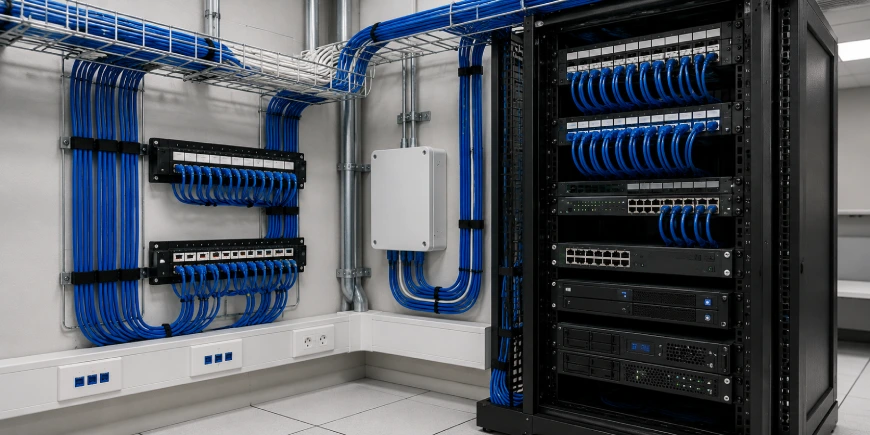
A commercial project may include dedicated equipment rooms, cable trays, conduits, patch panels and labeled outlets.
Planning these elements during construction or renovation can reduce the cost and disruption of future technology upgrades.
Low Voltage Cabling for Security Cameras
Modern IP cameras commonly use Ethernet cabling.
A typical installation may include:
- An IP camera
- Cat6 or Cat6A network cabling
- A Power over Ethernet switch
- A network video recorder
- A monitoring workstation or mobile application
The same Ethernet cable may provide power and network communication.
For large properties, fiber optic cabling may connect distant buildings or network rooms, while copper Ethernet cabling connects individual cameras.
Professional security camera installation in Halifax, Ottawa, or Calgary should consider cable distance, camera resolution, network capacity, recording requirements and future expansion.
Low Voltage Cabling for Access Control
Access control systems use low-voltage wiring to connect door equipment and control devices.
A typical system may include:
- Card or mobile credential reader
- Access control panel
- Electric lock
- Door position sensor
- Exit button or sensor
- Power supply
- Network connection
The system verifies a credential and sends a command to allow or deny access.
Correct wiring is important because access control systems must operate reliably during normal use and respond appropriately to power failures or emergency conditions.
Planning a Low Voltage Cable Installation
A professional low voltage cable installation usually begins with a site review.
The planning process may include:
1. Assessing Building Requirements
The installer reviews:
- Building size
- Number of devices
- Equipment locations
- Existing infrastructure
- Current technology needs
- Future expansion
2. Selecting Cable Types
The cable is selected based on:
- Data requirements
- Cable distance
- Device compatibility
- Power needs
- Installation environment
- Performance requirements
3. Planning Cable Pathways
Cables may be installed through:
- Conduits
- Cable trays
- Ceiling spaces
- Raised floors
- Wall pathways
Pathways should allow safe installation, maintenance and future additions.
4. Installing and Terminating Cables
Cables are routed, protected, terminated and connected to the required equipment.
Proper handling helps prevent excessive bending, damage, signal loss and performance problems.
5. Testing and Documentation
The completed system should be tested and documented.
Documentation may include:
- Cable labels
- Test results
- Device locations
- Network connections
- Equipment information
Clear documentation makes future maintenance easier.
When Should You Hire a Low Voltage Cabling Contractor?
A low voltage cabling contractor may be helpful when:
- A commercial building is being constructed
- A business is expanding
- New security cameras are being installed
- Access control is being added
- Existing cabling is disorganized
- Multiple systems need integration
- Long-distance network connections are required
- Future expansion is planned
Professional low voltage cabling services can help ensure that the infrastructure is organized, tested and suitable for the building’s technology requirements.
How to Choose a Low Voltage Cabling Company
Before selecting a contractor, ask:
- Do they have experience with similar projects?
- Can they design and install the complete system?
- Do they provide cable testing?
- Will cables be labeled and documented?
- Can they support CCTV and access control integration?
- Do they plan for future expansion?
- What support is available after installation?
A clear scope of work and documented testing can provide greater confidence in the finished infrastructure.
Conclusion
Low voltage cabling is the foundation that connects many modern building technologies. It supports security cameras, access control, computer networks, communications and smart systems.
The right cable type and installation method depend on the system’s purpose, distance, power needs, building environment and future plans.
Well-designed low voltage infrastructure can improve reliability, simplify maintenance and make future expansion easier. AlfaDefence.io provides professional low voltage cabling, security camera wiring, access control wiring and integrated security infrastructure services across Halifax, Ottawa, Calgary and Canada.
Frequently Asked Questions
- What is low voltage cabling used for?
Low voltage cabling supports systems such as security cameras, access control, computer networks, telecommunications, wireless equipment, intercoms and building automation. It carries data, communication signals, control information, or limited power, depending on the cable type and connected equipment.
- What is the difference between low voltage wiring and electrical wiring?
Low voltage wiring is generally used for data, communications, security, control signals and compatible device power. Standard electrical wiring supplies power to lighting, outlets and equipment. Each system uses different cable types, installation practices, safety requirements and performance standards.
- Can low voltage cabling power security cameras?
Yes. Ethernet cabling can power compatible IP security cameras through Power over Ethernet, also called PoE. The same cable carries network data and electrical power. Camera distance, power requirements, cable quality and network equipment should be considered during installation.
- What type of cable is used for low voltage networks?
Cat5e, Cat6 and Cat6A cables are commonly used for low voltage network cabling. Fiber optic cabling may be used for high-capacity or long-distance connections. The correct cable depends on network speed, cable length, device requirements and future expansion plans.
- Is low voltage cabling required for access control systems?
Many access control systems require low-voltage wiring to connect readers, controllers, locks, sensors, power supplies and network equipment. The wiring design depends on the door hardware and system configuration. Professional installation helps support reliable operation and proper system integration.
- How long does a low voltage cable installation take?
Installation time depends on the building size, number of devices, cable pathways, construction conditions and system complexity. A small installation may take a short period, while a large commercial low voltage infrastructure project may require several phases and coordinated construction scheduling.
- Why should businesses use a professional low voltage cabling contractor?
A professional contractor can assess requirements, select suitable cables, plan pathways, install and terminate connections, perform testing and provide documentation. This helps improve reliability, simplify troubleshooting, support security system integration and prepare the building for future technology expansion.