
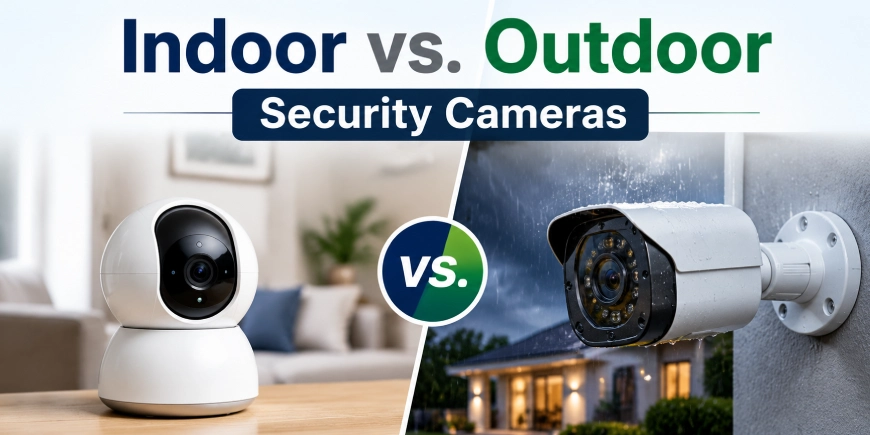
Security cameras have become an essential part of protecting homes, businesses, schools, warehouses, hospitals and commercial buildings. However, not every camera is designed for every environment. Choosing the wrong type can affect image quality, durability and overall security.
Understanding the differences between indoor vs. outdoor security cameras will help you select the right solution for your property and avoid unnecessary replacement costs.
If you’re looking for a security camera installation company in Canada, choosing an experienced installer ensures your cameras are positioned correctly and designed to provide reliable protection for years to come.
What Are Indoor Security Cameras?
Indoor security cameras are designed for use inside buildings where they are protected from rain, dust, wind and extreme temperatures.
They are commonly installed in:
- Homes
- Offices
- Retail stores
- Schools
- Reception areas
- Warehouses
- Hotels
- Healthcare facilities
Indoor cameras are ideal for monitoring entrances, hallways, offices, inventory rooms and customer areas.
What Are Outdoor Security Cameras?
Outdoor security cameras are specifically designed to withstand changing weather conditions while providing reliable surveillance around the exterior of a property.
Common installation locations include:
- Building entrances
- Parking lots
- Loading docks
- Driveways
- Building perimeters
- Construction sites
- Public spaces
Outdoor cameras help detect suspicious activity before someone enters the building.
Indoor vs. Outdoor Security Cameras: Key Differences
Weather Resistance
The biggest difference between indoor and outdoor cameras is durability.
Outdoor cameras are built to withstand the following:
- Rain
- Snow
- Dust
- Heat
- Cold temperatures
- Humidity
Most outdoor cameras carry an IP (Ingress Protection) rating that indicates their resistance to water and dust.
Indoor cameras do not usually include weatherproof protection because they operate in controlled environments.
Camera Housing
Outdoor cameras use stronger protective casings to shield internal components from environmental damage and vandalism.
Indoor cameras are generally smaller, lighter and designed to blend into interior spaces.
Night Vision
Both indoor and outdoor cameras often include infrared night vision.
However, outdoor cameras typically provide the following:
- Longer viewing distances
- Stronger infrared illumination
- Better low-light performance
This allows them to monitor parking lots, building entrances and large outdoor areas effectively.
Field of View
Indoor cameras usually monitor the following:
- Hallways
- Rooms
- Reception areas
- Cash registers
- Offices
Outdoor cameras often cover the following:
- Parking areas
- Property boundaries
- Driveways
- Building entrances
- Delivery zones
The camera lens is selected based on the size of the area being monitored.
Installation Requirements
Installing outdoor cameras generally requires additional planning because installers must consider the following:
- Weather exposure
- Cable protection
- Mounting height
- Lighting conditions
- Network connectivity
- Power availability
Professional CCTV installation services ensure outdoor cameras are installed securely and positioned to minimize blind spots.
Maintenance
Outdoor cameras require periodic cleaning because dirt, dust, pollen, snow and rain can affect image quality.
Indoor cameras generally require less maintenance since they operate in cleaner environments.
Routine inspections help both systems continue performing at their best.
Should You Choose Indoor or Outdoor Security Cameras?
The answer depends on what you need to protect.
Choose indoor security cameras if you want to monitor:
- Employees
- Customers
- Reception areas
- Hallways
- Inventory rooms
- Offices
- Classrooms
- Storage areas
Choose Outdoor Security Cameras If You Want To Monitor the Following:
- Parking lots
- Building entrances
- Driveways
- Loading docks
- Property boundaries
- Outdoor equipment
- Construction sites
Many Properties Need Both
Most businesses benefit from using both indoor and outdoor cameras.
For example:
A retail store may install:
- Outdoor cameras to monitor entrances and parking areas
- Indoor cameras to monitor checkout counters, aisles and stock rooms
Similarly, warehouses often protect loading docks outside while monitoring inventory inside.
A combined surveillance system provides complete coverage and reduces security gaps.
Why Professional CCTV Installation Matters
Even the best cameras cannot provide effective security if they are installed in the wrong location.
Professional CCTV installation services typically include the following:
- Site inspection
- Risk assessment
- Camera placement planning
- Network design
- Cable installation
- Recorder configuration
- Mobile viewing setup
- Performance testing
- User training
Professional installation improves image quality, reduces blind spots and helps maximize the life of your surveillance system.
Industry Standards Support Reliable CCTV Systems
Professional surveillance systems are installed using recognized security and networking standards.
Organizations such as the Security Industry Association (SIA) provide best practices for designing and implementing electronic security systems. Following these guidelines helps improve reliability, cybersecurity and long-term performance.
Choosing the Right CCTV Installation Services Company
When selecting a CCTV installation services company, consider whether they:
- Conduct a detailed site assessment
- Recommend the right camera types
- Design complete surveillance coverage
- Use commercial-grade equipment
- Test every camera before handover
- Offer maintenance and technical support
- Plan for future system expansion
Working with experienced professionals helps ensure your investment delivers reliable protection for years.
CCTV Installation Services Across Canada
Whether you need CCTV installation services in Calgary, Halifax, or Ottawa, choosing a qualified installer ensures your surveillance system is designed for your property’s layout, security risks and future growth.
Professional planning also makes it easier to expand your camera system as your security requirements change.
Conclusion
When comparing indoor vs. outdoor security cameras, neither option is better on its own, they are designed for different purposes. Indoor cameras protect people, assets and activities inside a building, while outdoor cameras help detect threats before they reach your property.
For the best protection, many homes and businesses benefit from combining both types into a single surveillance system.
At AlfaDefence.io, we help property owners across Canada design and install reliable CCTV solutions with professionally planned indoor and outdoor camera systems that deliver long-term security and peace of mind.
Frequently Asked Questions
- What is the difference between indoor and outdoor security cameras?
Indoor security cameras are designed for protected indoor environments, while outdoor security cameras are built to withstand weather, temperature changes, dust and moisture. Outdoor models also typically provide longer night vision and more durable construction.
- Can indoor security cameras be installed outside?
No. Indoor cameras are not designed to handle rain, snow, heat, or dust. Installing them outdoors can damage the equipment and reduce reliability. Outdoor cameras should always be used in exterior locations.
- Why do businesses need both indoor and outdoor security cameras?
Using both camera types creates complete surveillance coverage. Outdoor cameras monitor building entrances and surrounding areas, while indoor cameras protect offices, inventory, employees and customers throughout the property.
- Why should I hire professional CCTV installation services?
Professional CCTV installation services ensure cameras are positioned correctly, network connections are reliable, blind spots are minimized and the entire system is tested for dependable performance before it becomes operational.
- Are CCTV installation services available in Halifax, Ottawa and Calgary?
Yes. Professional providers offer CCTV installation services in Calgary, Halifax and Ottawa for homes, offices, commercial buildings, schools, hospitals, warehouses and industrial facilities.
- How do I choose the right CCTV installation services company?
Choose a CCTV installation services company with experience in site surveys, surveillance design, commercial-grade equipment, system integration, ongoing maintenance and scalable security solutions that can grow with your property’s future needs.