
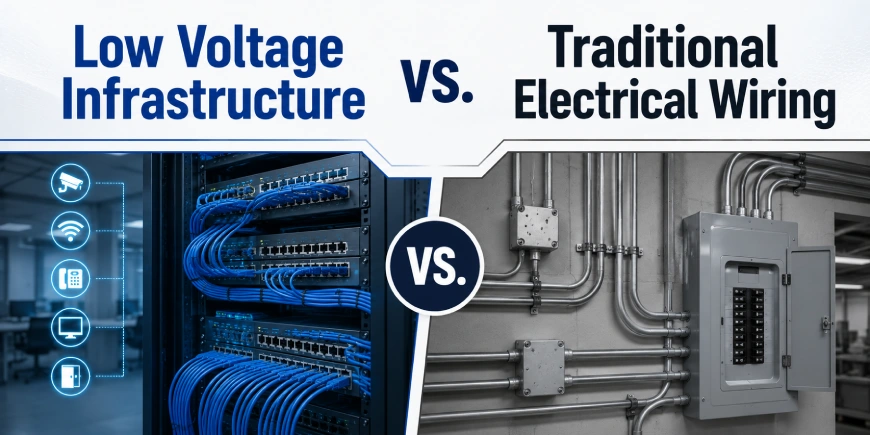
Modern buildings rely on much more than lighting and electrical outlets. Today’s homes, offices, schools, hospitals, warehouses and commercial facilities depend on security systems, data networks, communication systems and smart building technologies. Understanding the difference between Low Voltage Infrastructure and traditional electrical wiring is essential when planning a new construction project or upgrading an existing property.
While both systems are important, they serve very different purposes. Traditional electrical wiring delivers power to equipment, whereas low voltage infrastructure supports communication, security, networking and automation systems.
If you’re searching for a security camera installation company in Canada, choosing a provider with expertise in low voltage infrastructure ensures your security and communication systems are designed for long-term reliability and future expansion.
What Is Traditional Electrical Wiring?
Traditional electrical wiring distributes high-voltage electricity throughout a building to power electrical devices and equipment.
It is responsible for supplying electricity to:
- Lighting fixtures
- Power outlets
- HVAC systems
- Kitchen appliances
- Industrial machinery
- Electrical panels
Without traditional electrical wiring, buildings cannot operate safely or efficiently.
What Is Low Voltage Infrastructure?
Low voltage infrastructure consists of cabling and equipment that transmit data, communication signals and control functions rather than high-voltage electrical power.
A professionally designed low voltage network infrastructure typically supports:
- Security cameras
- Access control systems
- Alarm systems
- Structured cabling
- Computer networks
- Wi-Fi access points
- Audio and video systems
- Telephone systems
- Building automation
- Smart building technologies
Unlike electrical wiring, these systems focus on communication, monitoring and connectivity.
Low Voltage Infrastructure vs. Traditional Electrical Wiring
Purpose
Traditional electrical wiring powers electrical equipment.
Low voltage infrastructure connects devices, transfers information and enables communication between security, networking and automation systems.
Although both are essential, they perform completely different functions.
Voltage Levels
Traditional electrical systems operate at significantly higher voltages designed to deliver electrical power.
Low voltage systems generally operate below 50 volts, making them suitable for communication equipment, networking devices and security technologies.
Applications
Traditional Electrical Wiring
- Lighting
- Electrical outlets
- HVAC equipment
- Heavy machinery
- Household appliances
Low Voltage Infrastructure
- CCTV systems
- Access control
- Structured cabling
- Data networks
- Intercom systems
- Smart building controls
- Fire alarm communication
- Wireless networking
Installation Requirements
Electrical wiring and low voltage installation require different planning, materials and installation practices.
Professional installers carefully separate power cables from data cables to reduce signal interference and maintain network performance.
This organized approach improves reliability while simplifying future maintenance.
Future Expansion
Modern buildings continue to adopt new technologies such as the following:
- Smart lighting
- AI-powered surveillance
- Cloud networking
- Internet of Things (IoT)
- Remote building management
A scalable integrated low-voltage systems design allows businesses to add new devices without replacing the existing infrastructure.
Maintenance
Well-organized low-voltage cabling is easier to identify, troubleshoot and upgrade than poorly organized wiring.
Professional installations include:
- Cable labeling
- Network documentation
- Equipment rack organization
- Performance testing
These practices reduce downtime and simplify future repairs.
Benefits of Low Voltage Infrastructure
Better Security
Low voltage systems support the following:
- CCTV cameras
- Access control
- Intrusion alarms
- Video intercoms
These technologies work together to improve overall building security.
Reliable Communication
Businesses depend on reliable communication every day.
Professional commercial network infrastructure supports the following:
- Internet access
- VoIP phone systems
- Wireless networking
- Video conferencing
- Cloud applications
Reliable connectivity improves employee productivity and customer service.
Supports Smart Buildings
Modern smart building infrastructure integrates multiple technologies into one connected system.
Examples include:
- Automated lighting
- Occupancy sensors
- Energy management
- Environmental monitoring
- Remote building control
This improves operational efficiency while reducing energy costs.
Easier Upgrades
A professionally designed commercial low voltage systems infrastructure makes it easier to add the following:
- Additional security cameras
- Wireless access points
- Network switches
- Access control doors
- Smart building devices
without major renovations.
Why Professional Installation Matters
Low voltage systems require careful planning to deliver reliable performance.
Experienced low voltage contractors typically provide the following:
- Site assessments
- Infrastructure planning
- Cable pathway design
- Equipment installation
- Cable testing
- Network certification
- Complete documentation
- Ongoing support
These steps help ensure the system performs efficiently for years.
Industry Standards Improve Performance
Professional installers follow recognized industry standards for telecommunications and low voltage infrastructure.
Organizations such as the BICSI publish best practices for designing and installing structured cabling and low voltage systems. Following these standards improves network reliability, simplifies maintenance and supports future technology upgrades.
Choosing the Right Low Voltage Contractor
Not every contractor specializes in modern communication infrastructure.
When selecting a Low Voltage Contractor, look for one that:
- Performs detailed site surveys
- Designs scalable network infrastructure
- Installs certified cabling
- Follows industry standards
- Tests every system before completion
- Provides clear documentation
- Offers ongoing maintenance
A professional installation reduces future issues while protecting your investment.
Low Voltage Infrastructure Across Canada
Whether you’re planning low voltage infrastructure in Calgary, Halifax or Ottawa, working with experienced professionals helps ensure your building is prepared for today’s technology and tomorrow’s growth.
Proper planning allows your communication, networking and security systems to operate together efficiently while supporting future expansion.
Conclusion
While traditional electrical wiring powers your building, low voltage infrastructure powers communication, security, networking and smart technologies. Both systems are essential, but they serve different purposes and require specialized planning and installation.
Investing in professionally designed low voltage infrastructure creates a reliable foundation for surveillance, access control, structured cabling and building automation while reducing maintenance costs and supporting future growth.
At AlfaDefence.io, we design and install scalable low voltage solutions that help businesses and property owners across Canada build secure, connected and future-ready facilities.
Frequently Asked Questions
- What is low voltage infrastructure?
Low voltage infrastructure refers to communication and security cabling that supports systems such as CCTV, access control, structured cabling, Wi-Fi, alarms and building automation. Unlike traditional electrical wiring, it transmits data and control signals rather than electrical power.
- What is the difference between low voltage infrastructure and electrical wiring?
Traditional electrical wiring delivers power to lights, outlets and equipment, while low voltage infrastructure connects communication and security systems. Both are essential, but they perform different functions and require different installation methods.
- Why should businesses invest in commercial low voltage systems?
Commercial low voltage systems improve security, support reliable networking, simplify communication and prepare businesses for future technology upgrades. They also reduce maintenance costs by providing an organized and scalable infrastructure.
- What services does a low voltage contractor provide?
A professional low voltage contractor designs, installs, tests and maintains structured cabling, access control, CCTV systems, network infrastructure, Wi-Fi, audio-visual systems and integrated building technologies for residential and commercial properties.
- Are low voltage infrastructure services available in Halifax, Ottawa and Calgary?
Yes. Professional providers offer low voltage infrastructure in Calgary, Halifax and Ottawa for homes, offices, commercial buildings, industrial facilities, schools, healthcare facilities and government properties.
- Why is professional low voltage installation important?
Professional low voltage installation ensures proper cable routing, system testing, documentation and compliance with industry standards. This improves performance, reduces downtime, simplifies maintenance and allows for easier expansion as technology needs grow.