
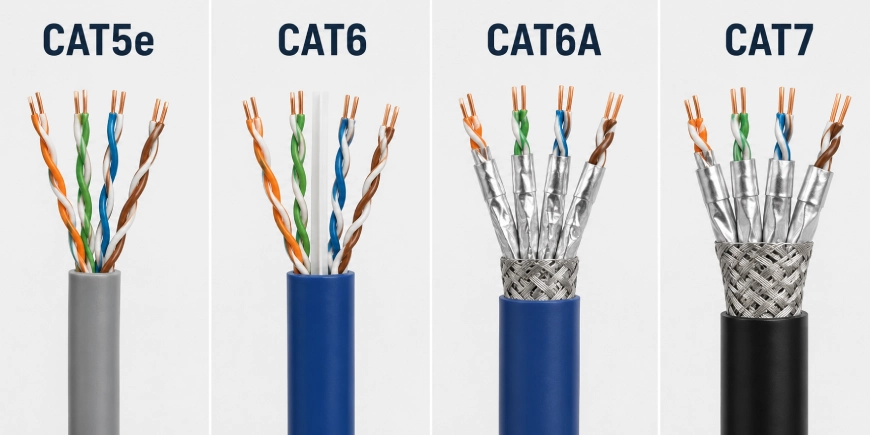
Choosing the right network cable is one of the most important decisions when installing or upgrading your business network. Whether you’re setting up an office, retail store, warehouse, school, hospital, or commercial building, the cable you choose affects your network’s speed, reliability, and ability to support future technology.
When comparing CAT5e vs. CAT6 vs. CAT6A vs. CAT7, it’s easy to assume the newest cable is always the best. In reality, the right choice depends on your business needs, network size, budget, and long-term plans.
If you’re looking for a Security Camera Installation Company in Canada, it’s also worth choosing a provider that offers professional structured cabling. A properly designed network supports security cameras, computers, Wi-Fi, VoIP phones, and other connected devices without performance issues.
Why Network Cabling Matters
Your network cable is the foundation of your entire communication system. It carries data between computers, servers, wireless access points, IP cameras, and other devices.
Installing the wrong cable can lead to:
- Slower network speeds
- Limited upgrade options
- Increased maintenance costs
- Performance bottlenecks
- Higher replacement costs later
Professional Structured Cabling Installation Services help ensure your infrastructure supports both your current and future networking needs.
CAT5e Cable
CAT5e (Category 5e) remains one of the most widely used Ethernet cables for homes and small businesses.
Key Features
- Supports speeds up to 1 Gbps
- Maximum cable length of 100 meters
- Affordable installation
- Compatible with most networking equipment
Best For
- Small offices
- Home networks
- Basic internet access
- Standard IP cameras
- Small retail stores
CAT5e continues to be a reliable option for businesses with modest bandwidth requirements.
CAT6 Cable
CAT6 offers improved performance over CAT5e with better shielding and higher bandwidth.
Key Features
- Supports speeds up to 10 Gbps for shorter distances (up to 55 meters)
- Reduced crosstalk and interference
- Better performance for high-speed applications
- Suitable for growing businesses
Best For
- Medium-sized offices
- Video conferencing
- Business Wi-Fi
- Cloud applications
- High-definition CCTV systems
For many businesses, CAT6 provides an excellent balance between performance and cost.
CAT6A Cable
CAT6A (Augmented Category 6) is designed for higher-speed networks over longer distances.
Key Features
- Supports 10 Gbps up to 100 meters
- Improved shielding against interference
- Greater bandwidth capacity
- Better performance in busy network environments
Best For
- Commercial buildings
- Healthcare facilities
- Schools
- Hotels
- Industrial facilities
- Large office networks
CAT6A is often recommended for organizations planning future expansion because it supports increasing bandwidth demands.
CAT7 Cable
CAT7 provides advanced shielding and is designed for specialized high-speed networking applications.
Key Features
- Supports up to 10 Gbps over 100 meters
- Superior shielding against electromagnetic interference
- Excellent signal quality
- Designed for high-performance environments
Best For
- Data centers
- Industrial facilities
- Specialized enterprise networks
- Environments with heavy electrical interference
Although CAT7 offers strong performance, many commercial Ethernet installations still rely on CAT6A because it is widely supported and compatible with standard networking equipment.
CAT5e vs. CAT6 vs. CAT6A vs. CAT7: Comparison Table
| Feature | CAT5e | CAT6 | CAT6A | CAT7 |
| Maximum Speed | 1 Gbps | 10 Gbps (up to 55 m) | 10 Gbps (100 m) | 10 Gbps (100 m) |
| Maximum Distance | 100 m | 100 m (1 Gbps) | 100 m | 100 m |
| Shielding | Basic | Improved | Enhanced | Advanced |
| Cost | Lowest | Moderate | Higher | Highest |
| Best Use | Homes & Small Offices | Growing Businesses | Commercial Buildings | Specialized Networks |
Which Cable Should You Choose?
Choose CAT5e If
- You have a limited budget.
- Your internet speed is below 1 Gbps.
- You operate a small office or home network.
- You have basic networking requirements.
Choose CAT6 If
- Your business is growing.
- You use cloud applications.
- You regularly transfer large files.
- You install HD security cameras.
- You want better long-term performance.
Choose CAT6A If
- You want a future-ready network.
- Your building requires long cable runs.
- You operate a large commercial property.
- You need consistent 10 Gbps performance.
Choose CAT7 If
- Your environment has significant electrical interference.
- You operate specialized enterprise infrastructure.
- You require additional cable shielding.
- Your project has unique networking requirements.
Why Professional Structured Cabling Matters
Choosing the right cable is only part of building a reliable network.
Professional Structured Cabling Services include:
- Site surveys
- Network design
- Proper cable routing
- Cable labeling
- Rack organization
- Performance testing
- Complete documentation
A professionally installed cabling system reduces downtime, improves troubleshooting, and makes future upgrades much easier.
Industry Standards Ensure Reliable Performance
Professional installers follow internationally recognized standards when designing structured cabling systems.
Organizations such as the BICSI provide best practices for planning, installing, and testing structured cabling infrastructure. Following these standards helps ensure long-term reliability, easier maintenance, and compatibility with future technologies.
Choosing the Right Structured Cabling Services Company
Selecting the right installer is just as important as selecting the right cable.
A trusted Structured Cabling Services Company should:
- Assess your current and future network needs
- Recommend the most suitable cable category
- Follow industry standards
- Test every cable after installation
- Label all network connections
- Provide complete documentation
- Offer maintenance and technical support
These practices help maximize your investment and reduce future network issues.
Structured Cabling Services Across Canada
Whether you need Structured Cabling Services in Halifax, Structured Cabling Services in Ottawa, or Structured Cabling Services in Calgary, working with experienced professionals ensures your network is designed for reliability, scalability, and long-term performance.
The right cabling infrastructure supports business growth while reducing maintenance costs and preparing your organization for future technologies.
Conclusion
Comparing CAT5e vs. CAT6 vs. CAT6A vs. CAT7 is about finding the cable that best fits your business, not simply choosing the newest option. CAT5e is suitable for basic networking, CAT6 offers an excellent balance of speed and value, CAT6A is ideal for future-ready commercial networks, and CAT7 is best suited for specialized environments with demanding performance requirements.
Professional Structured Cabling Installation Services ensure your network is installed correctly from the start, helping you avoid costly upgrades and performance issues later. At AlfaDefence.io, we help businesses across Canada build reliable, scalable network infrastructure with structured cabling solutions designed for long-term success.
Frequently Asked Questions
- What is the main difference between CAT5e, CAT6, CAT6A, and CAT7 cables?
The main differences are speed, bandwidth, shielding, and supported transmission distance. CAT5e is suitable for basic networking, CAT6 offers higher performance, CAT6A supports 10 Gbps over longer distances, and CAT7 provides additional shielding for specialized environments.
- Which cable is best for Structured Cabling Installation Services?
For most commercial projects, Structured Cabling Installation Services recommend CAT6 or CAT6A because they provide strong performance, excellent compatibility, and room for future network expansion while remaining cost-effective.
- Is CAT6A worth the extra cost over CAT6?
Yes, if your business expects future growth or requires 10 Gbps speeds across longer cable runs. CAT6A offers better shielding and higher long-term value, making it a popular choice for commercial buildings and enterprise networks.
- Is CAT7 necessary for small businesses?
In most cases, no. Small businesses usually receive excellent performance from CAT6 or CAT6A. CAT7 is generally used in specialized environments where additional shielding and protection from electrical interference are required.
- Are Structured Cabling Services in Halifax, Ottawa, and Calgary available for network upgrades?
Yes. Many providers offer Structured Cabling Services in Halifax, Structured Cabling Services in Ottawa, and Structured Cabling Services in Calgary for both new installations and upgrades to existing business networks.
- How do I choose the right Structured Cabling Services Company?
Choose a Structured Cabling Services Company that performs detailed site assessments, recommends the appropriate cable category, follows industry standards, tests every installation, and provides complete documentation and ongoing technical support.