
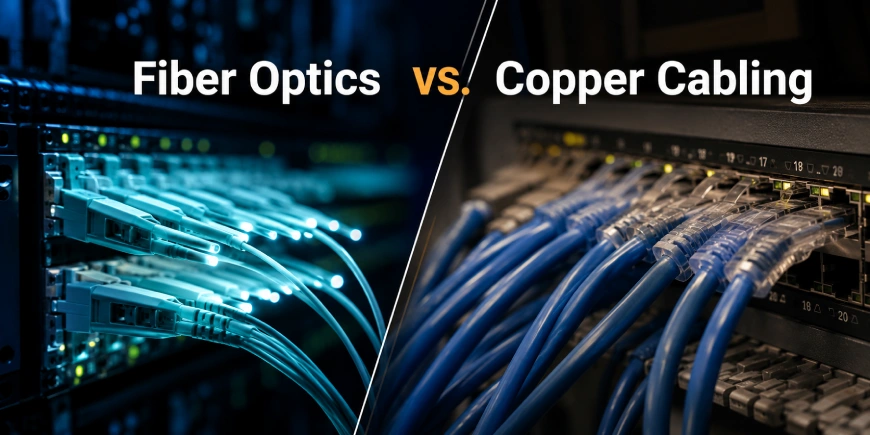
A reliable network is the backbone of every modern business. Whether you’re operating a retail store, office, warehouse, hospital, school, or industrial facility, your network supports everything from internet access and VoIP phones to security cameras and cloud applications.
When planning or upgrading your network, one of the biggest decisions is choosing fiber optic vs. copper cabling. Both technologies have advantages, but the right choice depends on your building, budget, performance requirements and future growth plans.
If you’re searching for a security camera installation company in Canada, it’s equally important to work with professionals who understand structured cabling. A well-designed network ensures your surveillance system and other business technologies operate reliably for years to come.
Understanding Fiber Optic Cabling
Fiber optic cables transmit data using pulses of light instead of electrical signals.
Because light travels much faster and is not affected by electromagnetic interference, fiber provides exceptional speed, reliability and long-distance performance.
Fiber cabling is commonly used in:
- Large commercial buildings
- Data centers
- Hospitals
- Universities
- Manufacturing facilities
- Multi-building campuses
- Enterprise networks
Understanding Copper Cabling
Copper cabling uses electrical signals to transfer data between devices.
It remains one of the most common networking solutions because it is affordable, easy to install and compatible with most business equipment.
Common copper cable types include:
- Cat5e
- Cat6
- Cat6A
- Cat7 (less commonly used in commercial Ethernet)
- Cat8 (specialized high-speed environments)
Copper continues to be an excellent solution for many small and medium-sized businesses.
Fiber Optics vs Copper Cabling: Key Differences
Speed
Fiber optic networks support significantly higher bandwidth than traditional copper cables.
Benefits include:
- Faster file transfers
- Better cloud application performance
- Smooth video conferencing
- Reliable 4K security camera streaming
Copper cables also provide excellent speeds, especially with Cat6A and Cat8, but fiber is better suited for organizations with very high bandwidth requirements.
Transmission Distance
One of fiber’s biggest advantages is distance.
Fiber optic cables can transmit data over several kilometers with minimal signal loss.
Copper Ethernet cables generally perform best over distances up to approximately 100 meters before requiring additional networking equipment.
For larger buildings and campuses, fiber is usually the preferred option.
Reliability
Fiber is immune to electromagnetic interference because it uses light instead of electricity.
This makes it especially useful in environments containing the following:
- Heavy machinery
- Manufacturing equipment
- Electrical rooms
- Industrial facilities
Copper performs very well in most office environments but may experience interference in electrically noisy locations.
Installation Cost
Copper cabling typically has a lower upfront installation cost.
Fiber installations usually require the following:
- Specialized equipment
- Fiber termination tools
- Certified technicians
- Precision testing
While fiber costs more initially, many businesses view it as a long-term investment due to its higher capacity and longer service life.
Maintenance
Both cabling systems are reliable when professionally installed.
However:
Copper
- Easier to repair
- Lower replacement costs
- Widely supported by networking equipment
Fiber
- Less susceptible to interference
- Extremely durable when installed correctly
- Requires specialized repair equipment
Professional structured cabling installation services help maximize the lifespan of either solution.
Security
Fiber optic cables are generally more difficult to tap without detection.
This makes fiber attractive for organizations that handle sensitive information, including:
- Financial institutions
- Government offices
- Healthcare providers
- Data centers
Although copper networks can also be secured, fiber offers an additional physical security advantage.
Scalability
Businesses continue to adopt:
- Cloud computing
- Artificial intelligence
- High-definition surveillance
- Internet of Things (IoT) devices
- Smart building technologies
Fiber infrastructure is often better prepared for future bandwidth demands.
However, copper remains an excellent solution for many businesses where network distances are shorter and bandwidth requirements are moderate.
Which Cabling Is Right for Your Business?
There isn’t a single answer for every property.
Fiber May Be Best If You Need the Following:
- Very high-speed data transfer
- Long cable runs
- Multi-building connectivity
- Industrial networking
- Enterprise-level scalability
- Future-ready infrastructure
Copper May Be Best If You Need the Following:
- Lower installation costs
- Office networking
- Small business infrastructure
- Standard CCTV systems
- Reliable Ethernet connections
- Easy equipment compatibility
Many modern buildings actually combine both technologies.
Fiber often serves as the backbone between network closets or buildings, while copper connects individual workstations, cameras, phones and wireless access points.
Why Professional Structured Cabling Matters
Regardless of the cable type you choose, proper installation determines overall network performance.
Professional structured cabling services include the following:
- Site surveys
- Network planning
- Cable routing
- Equipment rack organization
- Cable labeling
- Performance testing
- Documentation
- Future expansion planning
An organized installation minimizes downtime and simplifies future upgrades.
Industry Standards Ensure Quality
Professional installers follow internationally recognized standards for structured cabling.
Organizations such as the BICSI publish best practices for designing, installing and testing structured cabling systems. Following these standards helps ensure dependable performance, easier maintenance and compatibility with future technologies.
Choosing the Right Structured Cabling Services Company
Not every installer has the same level of experience.
When selecting a structured cabling services company, consider whether they:
- Perform a detailed site assessment
- Recommend solutions based on your business needs
- Install both fiber and copper networks
- Follow recognized industry standards
- Test every cable after installation
- Label all network connections
- Provide documentation and ongoing support
These practices reduce installation errors and improve long-term network reliability.
Structured Cabling Services Across Canada
Whether you’re planning structured cabling services in Halifax, structured cabling services in Ottawa, or structured cabling services in Calgary, choosing experienced professionals ensures your infrastructure is designed for both current operations and future business growth.
A properly installed structured cabling system supports security, communication, cloud services and business continuity while making future technology upgrades much easier.
Conclusion
When comparing fiber optic vs. copper cabling, the right solution depends on your business goals, building size, performance needs and budget. Fiber delivers outstanding speed, long-distance connectivity and scalability, while copper remains a reliable and cost-effective choice for many offices and commercial properties.
Many organizations benefit from a hybrid approach that combines both technologies for maximum efficiency. By investing in professional structured cabling services, businesses can build a dependable network that supports today’s operations and tomorrow’s technology.
At AlfaDefence.io, we design and install structured cabling solutions that help businesses across Canada create secure, scalable and high-performing network infrastructure tailored to their operational needs.
Frequently Asked Questions
- What is the difference between fiber optic and copper cabling?
Fiber optic cables transmit data using light, while copper cables use electrical signals. Fiber offers higher speeds, longer transmission distances and better resistance to interference, while copper is more affordable and works well for most office and commercial networking needs.
- Which option is better for structured cabling installation services?
The best choice depends on your business requirements. Professional structured cabling installation services often recommend fiber for large facilities and long-distance connections, while copper is ideal for shorter cable runs, office workstations and standard business networking.
- Can fiber optic and copper cabling be used together?
Yes. Many businesses use a hybrid network. Fiber serves as the backbone between buildings or communication rooms, while copper connects computers, IP phones, wireless access points and security cameras. This approach provides both performance and cost efficiency.
- Which businesses benefit most from fiber optic cabling?
Large offices, hospitals, schools, industrial facilities, financial institutions, data centers, hotels and organizations with high network traffic benefit most from fiber because it supports faster speeds, greater bandwidth and longer cable distances.
- Are structured cabling services in Halifax, Ottawa and Calgary available for both fiber and copper installations?
Yes. Professional providers offering structured cabling services in Halifax, structured cabling services in Ottawa and structured cabling services in Calgary typically install both fiber optic and copper cabling based on each property’s network requirements and future expansion plans.
- How do I choose the right structured cabling services company?
Choose a structured cabling services company with experience designing fiber and copper networks, performing detailed site assessments, following industry standards, testing every installation and providing complete documentation and ongoing technical support.