
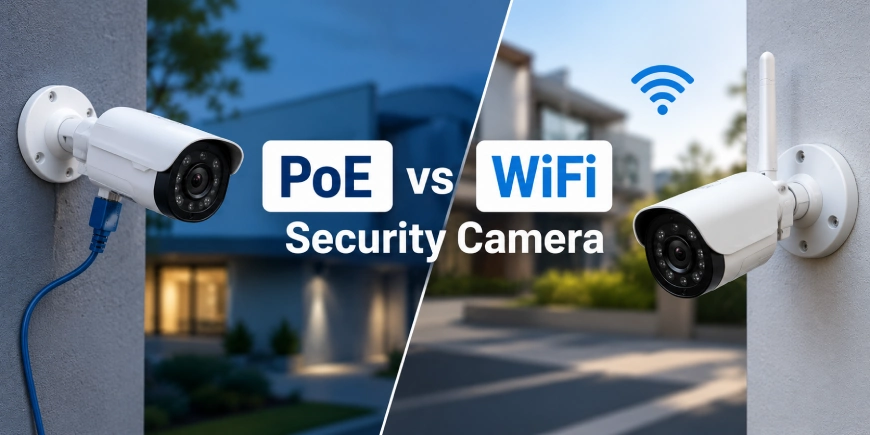
Choosing between PoE and WiFi security cameras can affect the reliability, video quality, maintenance and long-term performance of a surveillance system. Both technologies can provide useful protection, but they are designed for different installation conditions.
When comparing PoE vs WiFi Security Cameras, the main question is not simply which option is newer or easier to install. The better choice depends on the building layout, number of cameras, network strength, power availability and level of security required.
A professional Security Camera Installation Company in Canada can review the property, identify suitable camera locations, assess network capacity and recommend a system that matches current needs while allowing room for future expansion.
For many commercial properties, PoE cameras provide a stable and scalable solution. WiFi cameras can be useful where running network cables is difficult or where a smaller system is required.
What Are PoE Security Cameras?
PoE stands for Power over Ethernet. A PoE security camera receives both electrical power and network data through one Ethernet cable.
The cable connects the camera to a PoE network switch or PoE injector. This reduces the need for a separate power outlet at every camera location.
A typical PoE camera system includes:
- IP security cameras
- Cat5e, Cat6, or Cat6A Ethernet cabling
- PoE network switch or PoE injector
- Network Video Recorder (NVR)
- Surveillance storage drives
- Monitoring software or mobile application
Because the camera uses a physical network connection, it can provide consistent communication and dependable video transmission.
What Are WiFi Security Cameras?
WiFi security cameras send video data through a wireless network instead of using an Ethernet cable for network communication.
Most WiFi cameras still need a power source. They may connect to:
- A nearby electrical outlet
- A dedicated power adapter
- A rechargeable battery
- A solar charging system
WiFi cameras are often selected because they can be installed with less network cabling.
They may be useful for:
- Homes
- Small offices
- Temporary monitoring
- Rental properties
- Locations where cable routing is difficult
However, camera performance depends on the strength and stability of the wireless signal.
PoE vs WiFi Security Cameras: Quick Comparison
| Feature | PoE Security Cameras | WiFi Security Cameras |
| Network connection | Wired Ethernet | Wireless network |
| Power | Ethernet cable | Outlet, battery, or solar |
| Reliability | Generally consistent | Depends on WiFi strength |
| Video stability | Usually stable | Can be affected by interference |
| Installation | Requires cable routing | Often faster for small systems |
| Scalability | Strong for larger systems | May strain wireless networks |
| Remote monitoring | Supported | Supported |
| Maintenance | Lower after installation | May require WiFi troubleshooting |
| Best use | Commercial and permanent systems | Small or flexible installations |
Reliability: Which Option Is More Stable?
PoE cameras generally provide more consistent communication because each camera has a dedicated physical connection.
A properly installed Ethernet cable is less affected by:
- Wireless interference
- Weak signal areas
- Network congestion
- Changes in building layout
- Competing wireless devices
WiFi cameras can perform well when the wireless network is strong and properly designed. However, walls, metal structures, concrete, distance and nearby devices can reduce signal quality.
For large buildings, warehouses, industrial facilities, schools, hospitals and commercial properties, a wired PoE system is often easier to manage reliably.
Video Quality and Performance
Both PoE and WiFi cameras can support high-resolution video.
Video quality depends on:
- Camera sensor
- Resolution
- Lens quality
- Compression
- Available network bandwidth
- Lighting conditions
- Recording settings
A WiFi camera may support 4K video, but the wireless network must have enough capacity to transmit the footage without delays or interruptions.
PoE cameras generally provide more predictable bandwidth because the connection is wired.
For systems with many cameras, high-resolution recording, or continuous monitoring, PoE infrastructure can offer more consistent performance.
Installation Requirements
Installing PoE Cameras
PoE camera installation usually requires Ethernet cables to be routed from the camera locations to network equipment.
The installation may involve:
- Site assessment
- Camera placement planning
- Cable pathway design
- Cat6 cable installation
- PoE switch configuration
- NVR setup
- Camera testing
The initial installation may require more planning, especially in finished buildings.
However, one cable can provide both power and network connectivity, which can create a cleaner and more organized system.
Installing WiFi Cameras
WiFi cameras may be quicker to install because they do not require Ethernet cabling for data transmission.
However, installers still need to consider:
- Wireless signal strength
- Power availability
- Camera range
- Router capacity
- Network security
- Battery maintenance
A WiFi camera installed in an area with weak coverage may experience delayed video, connection loss, or reduced performance.
Cost Comparison
WiFi cameras may have lower installation costs for small properties because less cabling is required.
However, costs may increase if the property needs:
- Additional wireless access points
- Network upgrades
- Signal extenders
- Battery replacements
- Ongoing WiFi troubleshooting
PoE systems may have higher initial installation costs because of cabling, network switches and professional setup.
Over time, PoE systems can provide predictable performance and may require less routine attention.
The best comparison is the total cost of ownership, including installation, maintenance, upgrades and expected system life.
Security and Cybersecurity
Both PoE and WiFi cameras are connected devices and should be protected from unauthorized access.
Recommended security measures include:
- Strong, unique passwords
- Multi-factor authentication when available
- Regular firmware updates
- Separate networks for security devices
- Limited user permissions
- Secure remote access
WiFi cameras require additional wireless network protection because video data is transmitted over radio signals.
The Canadian Centre for Cyber Security recommends using strong authentication, keeping connected devices updated and securing networks against unauthorized access. (Canadian Centre for Cyber Security)
PoE cameras are not automatically immune to cyber risks. Their network equipment and user accounts still require proper security controls.
Scalability for Growing Properties
PoE systems are generally easier to expand in commercial environments.
Additional cameras can be connected through:
- Available PoE switch ports
- Additional network switches
- Structured cabling
- Expanded NVR capacity
The network can be designed with room for future cameras.
WiFi systems can become more difficult to manage as camera numbers increase. Multiple high-resolution cameras may use significant wireless bandwidth and create network congestion.
For businesses planning to add cameras over time, a structured PoE network may provide a stronger long-term foundation.
When PoE Security Cameras Are the Better Choice
PoE cameras may be the better option when:
- Reliable, continuous monitoring is required
- Multiple cameras are planned
- The property is commercial or industrial
- High-resolution video is important
- Network cabling can be installed
- Future expansion is expected
- A centralized NVR system is preferred
PoE systems are commonly used in:
- Warehouses
- Offices
- Schools
- Hospitals
- Retail facilities
- Hotels
- Industrial properties
- Multi-building sites
When WiFi Security Cameras Are the Better Choice
WiFi cameras may be suitable when:
- The system has only a few cameras
- Running Ethernet cables is difficult
- The property is rented
- Temporary monitoring is required
- The WiFi signal is strong
- Flexible camera placement is important
WiFi cameras can work well for homes and small businesses when network coverage is reliable.
Can You Use PoE and WiFi Cameras Together?
Yes. Some properties use a hybrid system.
For example:
- PoE cameras provide continuous coverage in critical areas.
- WiFi cameras monitor locations where cable installation is difficult.
- All cameras may be viewed through a centralized platform.
A hybrid design can provide flexibility without relying entirely on WiFi.
Compatibility should be checked before combining camera brands, recording platforms, or management software.
How to Choose the Right Security Camera System
Before selecting PoE or WiFi cameras, consider:
- How many cameras are required?
- Is continuous recording necessary?
- How strong is the WiFi signal?
- Can Ethernet cables be installed?
- Is high-resolution video required?
- Will more cameras be added later?
- Is the property commercial, industrial, or residential?
- What is the available installation budget?
- Is remote monitoring required?
- Who will maintain the system?
A professional security camera installer can assess the property and recommend a system based on practical requirements rather than camera price alone.
Conclusion
PoE and WiFi security cameras can both provide effective surveillance, but they serve different needs.
PoE cameras generally offer stronger reliability, stable video transmission, centralized management and easier expansion for commercial properties. WiFi cameras can provide faster installation and flexible placement for smaller systems with reliable wireless coverage.
For businesses that require continuous monitoring and long-term scalability, PoE is often the stronger option. For smaller or difficult-to-cable locations, WiFi may be more practical.
AlfaDefence.io provides professional security camera installation, PoE camera systems, WiFi surveillance solutions, network cabling and integrated security infrastructure across Halifax, Ottawa, Calgary and Canada.
Frequently Asked Questions
- Are PoE security cameras better than WiFi cameras?
PoE security cameras generally provide more stable connections because they use wired Ethernet cables for power and data. WiFi cameras offer flexible installation but depend on wireless signal quality. The better choice depends on property size, camera quantity, network reliability and monitoring requirements.
- Do PoE security cameras need a power outlet?
PoE cameras usually do not need a separate electrical outlet at the camera location. A compatible PoE switch or injector sends power and network data through one Ethernet cable. This can simplify security camera installation and reduce the amount of wiring required.
- Can WiFi security cameras work without the internet?
Many WiFi cameras require an internet connection for cloud recording, remote viewing and mobile alerts. Some models can record locally to a memory card or compatible device. Available features depend on the camera model, network configuration and selected storage system.
- Are PoE security cameras more reliable for businesses?
PoE cameras are often preferred for commercial properties because wired connections are less affected by wireless interference, weak signals and network congestion. They can support multiple cameras, continuous recording and high-resolution video when installed with suitable network equipment and cabling.
- Is PoE more expensive than WiFi security camera installation?
PoE systems may have higher initial costs because they require Ethernet cabling, PoE switches and professional installation. WiFi systems may cost less initially but can require wireless upgrades or ongoing troubleshooting. Long-term cost depends on system size and maintenance needs.
- How far can a PoE security camera be installed?
Standard Ethernet connections commonly support a maximum cable run of approximately 100 metres under standard network specifications. Longer distances may require network extenders, additional switches, or fiber infrastructure. A professional security camera installer can determine the appropriate design for each property.
- Can PoE and WiFi security cameras be used together?
Yes. A hybrid surveillance system can use PoE cameras in critical or high-traffic areas and WiFi cameras where cable installation is difficult. Compatible recording and management platforms are needed to provide reliable monitoring and centralized access.