
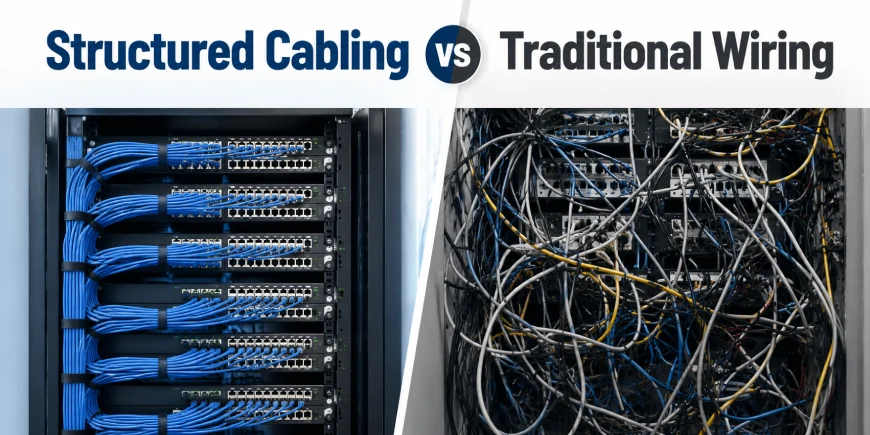
When planning a new home, office, warehouse, or commercial building, one important decision is choosing the right wiring system. While traditional wiring has been used for many years, modern buildings increasingly rely on structured cabling because it offers better performance, easier maintenance and greater flexibility.
Understanding Structured Cabling vs Traditional Wiring can help you make a smarter investment for your property. Whether you’re installing security cameras, access control, Wi-Fi, or communication systems, the right cabling infrastructure makes a significant difference.
If you’re looking for a Security Camera Installation Company in Canada, it’s equally important to choose a provider that understands professional structured cabling. A properly designed infrastructure helps support your security systems today while making future upgrades much easier.
What Is Traditional Wiring?
Traditional wiring is often installed one system at a time.
For example:
- One set of cables for telephones
- Another for internet
- Separate wiring for security cameras
- Additional cables for alarm systems
As more technologies are added over time, cable management becomes more complicated. This often leads to cluttered equipment rooms, difficult troubleshooting and higher maintenance costs.
What Is Structured Cabling?
Structured cabling is a standardized wiring system designed to support multiple technologies through one organized infrastructure.
Instead of installing separate cables for every device, structured cabling creates a central network that connects:
- Security cameras
- Computers
- Access control systems
- Wireless access points
- VoIP phones
- Network equipment
Professional Structured Cabling Installation Services follow recognized industry standards to ensure reliable performance and easy maintenance.
Structured Cabling vs Traditional Wiring: Key Differences
1. Installation Approach
Traditional wiring is usually installed as new equipment is added.
Structured cabling is carefully planned before installation, creating a clean and organized network that supports current and future technologies.
2. Organization
Traditional wiring often results in tangled cables that become difficult to identify over time.
Structured cabling uses:
- Cable labels
- Organized racks
- Patch panels
- Proper cable routing
This makes future maintenance much easier.
3. Scalability
Businesses grow.
More employees, more devices and more security cameras all require additional network capacity.
Structured cabling makes expansion simple because the infrastructure is already designed for future growth.
Traditional wiring often requires installing new cables each time new equipment is added.
4. Performance
Reliable communication depends on stable network connections.
Structured cabling helps reduce:
- Signal interference
- Connection failures
- Data transmission problems
- Network downtime
This becomes especially important for security cameras and business-critical systems.
5. Maintenance
When problems occur, technicians must quickly locate the issue.
With traditional wiring, identifying faulty cables can take hours.
Organized structured cabling allows technicians to trace connections much faster, reducing repair time and business disruption.
Why Structured Cabling Is Better for Modern Buildings
Today’s buildings depend on multiple connected technologies.
These may include:
- CCTV systems
- Access control
- Smart building automation
- Wi-Fi networks
- Video conferencing
- Cloud-based communication
- Internet-connected devices
Structured cabling supports all these systems through one reliable infrastructure.
Long-Term Cost Benefits
Although structured cabling may require a larger investment during installation, it often saves money over time.
Benefits include:
- Fewer repairs
- Easier troubleshooting
- Faster upgrades
- Lower labor costs
- Longer infrastructure lifespan
- Reduced downtime
Many property owners find that the long-term savings outweigh the initial installation cost.
Industry Standards Matter
Professional installers follow internationally recognized standards to ensure reliability and compatibility.
Organizations such as the BICSI publish best practices for structured cabling design and installation, helping businesses build reliable communication and security networks that can support future technologies.
Who Benefits Most from Structured Cabling?
Structured cabling is suitable for almost every property type.
Homeowners
Supports smart home devices, security cameras, home offices and reliable internet connections.
Small Businesses
Provides an organized network that grows with the business while reducing maintenance costs.
Commercial Buildings
Supports large numbers of users, security systems and network devices without creating cable clutter.
Industrial Facilities
Offers dependable connectivity for surveillance, manufacturing equipment and warehouse operations.
Schools, Hospitals, Hotels and Government Buildings
Large facilities require reliable communication between many systems. Structured cabling helps keep everything organized while simplifying future upgrades.
Choosing the Right Structured Cabling Services Company
Not every installer provides the same level of quality.
Before hiring a Structured Cabling Services Company, ask whether they:
- Conduct a complete site assessment
- Design the network for future expansion
- Use certified cabling materials
- Label every cable
- Test all connections
- Provide documentation after installation
- Offer maintenance and technical support
These steps help ensure your network performs reliably for years.
Structured Cabling Services Across Canada
Whether you need Structured Cabling Services in Halifax, Structured Cabling Services in Ottawa, or Structured Cabling Services in Calgary, working with experienced professionals helps ensure your infrastructure is installed correctly from the beginning.
An organized cabling system supports security, communication and business operations while making future technology upgrades easier and more cost-effective.
Conclusion
When comparing Structured Cabling vs Traditional Wiring, the difference goes beyond cable management. Structured cabling offers better organization, higher reliability, easier maintenance, improved scalability and stronger long-term value.
For homes, businesses, educational institutions, healthcare facilities, industrial sites and commercial properties, investing in professional Structured Cabling Installation Services creates a future-ready network that supports today’s technology and tomorrow’s growth.
At AlfaDefence.io, we provide professionally designed structured cabling solutions that help Canadian property owners build reliable, organized and scalable network infrastructure with confidence.
Frequently Asked Questions
- What is the biggest difference between structured cabling and traditional wiring?
Traditional wiring is typically installed separately for each system, while structured cabling uses one organized infrastructure to support multiple technologies. This improves reliability, simplifies maintenance and makes future upgrades much easier for homes and businesses.
- Are Structured Cabling Installation Services worth the investment?
Yes. Professional Structured Cabling Installation Services reduce maintenance costs, improve network performance, simplify troubleshooting and allow businesses to expand without major rewiring. Most property owners recover the investment through lower long-term operating costs.
- Who should consider Structured Cabling Services?
Homeowners, offices, schools, hospitals, hotels, warehouses, retail stores, industrial facilities and commercial buildings all benefit from Structured Cabling Services because they support security systems, internet connectivity, communication networks and future technology upgrades.
- Can structured cabling support security cameras and smart devices?
Absolutely. Structured cabling provides a stable infrastructure for CCTV systems, access control, Wi-Fi, smart building automation and many other connected technologies, making it an ideal choice for modern properties.
- Are Structured Cabling Services in Halifax, Ottawa and Calgary available for small businesses?
Yes. Many providers offer Structured Cabling Services in Halifax, Structured Cabling Services in Ottawa and Structured Cabling Services in Calgary for businesses of all sizes, from small offices to large commercial and industrial facilities.
- How do I choose the right Structured Cabling Services Company?
Look for a Structured Cabling Services Company that performs site surveys, follows industry standards, uses quality materials, tests every connection, provides clear documentation and offers ongoing maintenance to ensure long-term network reliability.